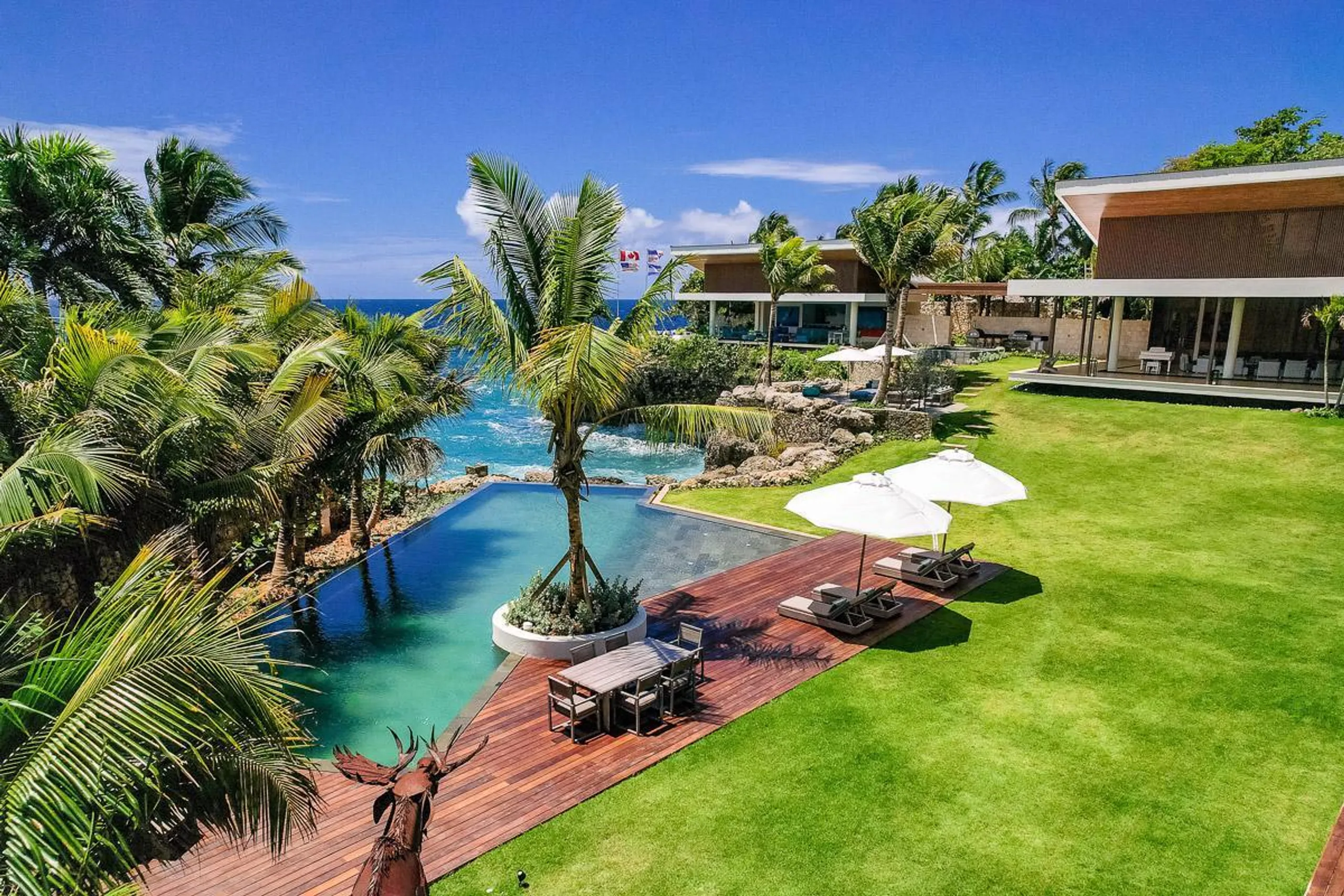
Find your Dominican Republic villa region through eastern beaches, Casa de Campo, Samaná's landscape and the cultural depth of Santo Domingo.
Planning a Dominican Republic villa stay
Choosing a Dominican Republic luxury villa starts with the daily experience you want: punta cana area, casa de campo area, or villa-centered days. Compare the exact location, bedroom layout and outdoor space, then confirm access, included services and arrangements for your dates with the property team.
| Setting or priority | A good fit for | Check before booking |
|---|---|---|
| Punta Cana area | A coastal holiday base | Confirm the exact community and included access |
| Casa de Campo area | A shared private-home stay | Check separately quoted facilities and services |
| Villa-centered days | Dining and time together | Confirm staffing, shopping and meal arrangements |
Explore Dominican Republic luxury villas
Start with a region, not an airport photograph
Dominican Republic luxury villa rentals span a country whose differences cannot be captured by one white-sand beach. Punta Cana, La Romana, Samaná and Puerto Plata belong to distinct holiday geographies, while Santo Domingo and the mountain interior offer experiences that a resort-only itinerary can miss. The right starting point is the region where you want to spend ordinary days, not the longest list of attractions available somewhere within the country.
A private villa can make those ordinary days exceptionally comfortable. Yet its value depends on the relationship between house and place. A golf-centered estate stay near La Romana, a beach-and-marina week in the Punta Cana area and a more exploratory northern-coast holiday require different decisions. Choose the setting first, then the property, then a small number of experiences that fit the geography. The Dominican Republic rewards curiosity, but it also rewards realistic scale: a country with several compelling regions deserves more than a hurried attempt to connect all of them in one week.
Punta Cana and the eastern beach corridor
Punta Cana is best understood as a broad visitor region on the eastern tip rather than a single compact beach town. Bávaro, Macao, Juanillo and the Puntacana Resort area each appear in the wider eastern conversation, but they are not interchangeable addresses. The official Punta Cana destination overview identifies beaches, golf and ecological attractions as part of that range.
For a first villa holiday, this region is attractive when the party wants a beach-led stay with established visitor infrastructure. The practical task is to narrow the search to a specific community and stretch of coast. A villa associated with a golf estate may be ideal for golfers and a poor match for guests who expect to walk directly onto sand. The resort or community name matters because it determines the daily setting more precisely than Punta Cana alone.
Our Punta Cana guide explores those distinctions in greater detail. At country level, the decision is simpler: choose the east when a comfortable coastal base and a carefully selected collection of outings are the main goal. Give other regions their own time rather than treating them as incidental extensions of an eastern stay.
La Romana and Casa de Campo are related, not identical
La Romana is a regional destination and a city; Casa de Campo is a particular resort and residential estate nearby. Keeping those identities separate makes villa planning clearer. The official La Romana introduction places cultural and coastal attractions within the broader area, while Casa de Campo adds its own organized world of golf, marina life and leisure facilities.
Choose Casa de Campo when that estate environment is itself the attraction. Teeth of the Dog, Dye Fore and The Links are distinct golf names, and Altos de Chavón provides an architectural and cultural focus above the river. The house can function as a gathering place between rounds, beach time and dinners within the estate. Access arrangements and booked activities belong to the terms of the actual stay, not to an assumption created by the address.
Choose the broader La Romana region when the question is how to combine the area's coast, excursions and cultural interests. That distinction prevents a common mismatch: booking for a destination name while expecting the specific privileges or atmosphere of one community inside it.
Bayahibe and the Caribbean-facing coast
Bayahibe introduces a coastal setting with a different relationship to excursions. The official Bayahibe guide places it within the country's southern coastal geography. For travelers interested in islands, diving or a village atmosphere alongside beach time, it belongs in the regional conversation around La Romana rather than being folded indistinctly into Punta Cana.
Think carefully about the departure point for any boat day. Excursions sold from an eastern resort may involve a substantial land transfer before the water portion begins. The headline image of Saona or Catalina does not show that journey. Staying closer to the relevant departure area can change the character of the day, while an eastern base may still be appropriate if the excursion is only one element of the week.
The sensible country-level decision is to identify whether marine outings are central or occasional. If they are central, choose a region that supports them naturally. If they are occasional, keep the day realistic and leave the evening easy. Neither island visits nor wildlife encounters should be treated as guaranteed regardless of conditions. A well-led, appropriately paced outing is more valuable than an overfilled itinerary.
Samaná and a landscape-led holiday
Samaná brings green hills, a broad bay and a different sense of coastal scale. The official Samaná overview connects the peninsula with seasonal humpback whale watching, El Limón waterfall, Las Galeras and Playa Rincón. These are reasons to choose the region in its own right, not simply attractions to append to a Punta Cana week because a map makes the island appear manageable.
A Samaná stay suits travelers whose curiosity extends beyond the pool terrace. The landscape encourages a mixture of beach days and selected outings, with enough time to appreciate the journey between places. Whale watching, when in season, should use a responsible operator and realistic expectations; the animals determine the encounter. A waterfall visit likewise needs a route and conditions suited to the group.
The region's appeal is the relationship between coast and inland greenery. A villa with a memorable view can be a strong base, but the best position depends on which part of the peninsula you want to explore. Choose a few priorities and allow the rest of the week to remain open. The reward is a holiday shaped by place rather than by the breadth of an excursion catalogue.
Las Terrenas and the northern beach rhythm
Within the Samaná Peninsula, Las Terrenas offers a more town-and-beach-oriented proposition. Its named shores include Playa Bonita, Playa Cosón, Playa Las Ballenas and Punta Popy, while the official Las Terrenas guide emphasizes a mix of local and international food and a lively coastal setting. That combination can appeal to guests who want independence and variety beyond a single estate.
The beaches should be treated as different possible centers for a stay. A house near one does not automatically make every part of town convenient, and a peaceful position may be valuable precisely because it sits apart from the busiest social areas. Begin with the balance you want between being out and being home. Then assess the specific villa's relationship to the shore, meals and everyday errands.
Las Terrenas is especially useful in a country comparison because it reveals how different villa travel can look within the Dominican Republic. A private house need not mean a self-contained resort routine. It can support a more exploratory style in which the pleasure is discovering a neighborhood rhythm, returning to a beach and making some meals spontaneous.
Puerto Plata and the north coast's cultural depth
Puerto Plata adds another northern identity, combining a coastal city with historical sites and nearby beaches. The official Puerto Plata guide identifies the historic center, Fortaleza San Felipe, the Amber Museum and Playa Dorada among its focal points. A villa stay in the wider region can therefore include a substantial urban and cultural dimension rather than only excursions away from a resort.
Plan a city visit around a theme. The fort and waterfront can illuminate the relationship between port and coast, while amber offers another way to think about the region's natural history. Allow time for a meal and contemporary street life so the outing does not become a sequence of museum labels. Sites and services should be checked for current access, especially when a particular attraction is essential to the trip.
The north coast is a separate regional choice from the southeast. That fact is helpful, not limiting: it allows you to decide which holiday you are planning. Travelers attracted to Puerto Plata's urban character and surrounding coastal activity should give it a proper stay rather than spend much of their time traveling from a base chosen for another part of the country.
Santo Domingo deserves its own chapter
Santo Domingo is the country's capital and a compelling addition when culture is central to the trip. Its Colonial Zone brings Calle Las Damas, Fortaleza Ozama, Plaza España and Parque Colón into a relatively focused historical geography. The official city guide also points beyond the historic center to the Malecón and Los Tres Ojos, reminders that the capital is larger and more varied than its best-known quarter.
A considered city stay or carefully planned visit is preferable to treating Santo Domingo as a long box-ticking day. Choose a guided walk, one or two interiors that interest you and a meal with room for conversation. The architecture belongs to a colonial history that includes exploitation and slavery; its beauty is more meaningful when approached with that context rather than as a decorative backdrop.
For a beach-and-city itinerary, settle the sequence before choosing flights. Beginning with the capital can provide cultural context for the rest of the holiday, while ending there creates a different closing chapter. The right order depends on actual travel arrangements, not a fixed rule that beach time must come last.
Jarabacoa and the country beyond the coast
Jarabacoa is a reminder that the Dominican Republic is also a mountain destination. The official Jarabacoa guide identifies the Yaque del Norte and Jimenoa rivers, the waterfalls of Jimenoa and Baiguate, and the meeting of rivers at La Confluencia. This landscape introduces a different climate and pace from the coastal villa image.
The region suits a separate nature-focused chapter, especially for travelers who enjoy guided walks and outdoor activity. More demanding experiences should be chosen for actual fitness and conditions. A mountain excursion is not improved by exaggerating its ease, and a waterfall need not become a swimming stop to be worthwhile. The scenery can be enjoyed through a measured itinerary that leaves room for the place itself.
At the planning stage, Jarabacoa helps answer a fundamental question: do you want one restorative coastal stay or a journey through contrasting Dominican landscapes? Both are valid. Trying to achieve the second while booking only for the first tends to produce unnecessary travel. A clear itinerary respects the scale of the country and gives each chosen region enough time to make an impression.
Food that connects the itinerary
Food can provide continuity across regions without making their restaurants interchangeable. In Santo Domingo, Mesón de Bari's own channels identify its focus on Dominican gastronomy and its Colonial Zone and Naco locations. Choose the correct address for the day you are planning. A city meal can sit naturally alongside a historical walk, giving time to reflect on the place away from the street.
In the Punta Cana area, La Yola's current menu emphasizes coastal ingredients and seafood within a considered dining setting. It offers a different kind of occasion, connected to the marina landscape of Puntacana Resort. These two restaurant suggestions belong to their respective regions; neither should become an unreasonable journey from a distant villa simply to complete a recommendation.
At home, a chef can help introduce Dominican dishes in a way that fits the group's tastes and dietary needs. Arrange this with the actual property team rather than assuming a particular menu or staff member is included. Our private-chef villa dining guide helps define the service. A good food plan combines place-specific meals out with evenings when the private table is the point.
Seasons, airports and a realistic route
The country's tropical weather is not identical across every coast and elevation. Drier periods often attract strong beach demand, while rain, wind and seasonal marine conditions can affect individual outings. For Samaná whale watching, timing is integral to the experience; for a golf or dining trip, current operating calendars matter in different ways. Plan for the activity and the region, not a generic national forecast.
Airports should follow the itinerary. Punta Cana, La Romana, Santo Domingo and the northern gateways serve different geographical choices. A cheaper or more convenient flight can lose its advantage if it creates a difficult transfer to the selected villa. Confirm the exact route before booking independent components, and keep the first day's expectations modest.
Our villa arrival checklist is useful once the region is settled. For the itinerary itself, the art of doing less offers a relevant principle: depth often comes from fewer bases. The Dominican Republic has enough variety for several holidays, and acknowledging that makes the present one more enjoyable.
Finding the right Dominican Republic private villa
The most useful villa brief identifies a region and the experiences that justify it. Punta Cana supports one set of coastal expectations; Casa de Campo adds a specific estate setting; Samaná and the north offer different relationships between town, landscape and beach. Our villa comparison checklist can help compare houses once those larger choices are clear.
Send a Dominican Republic villa inquiry with dates, party details and your preferred region or two realistic alternatives. Public villas are a sampling; additional private or pocket listings may be shared by email after inquiry, subject to availability.
Questions about Dominican Republic villa stays
How should I choose a villa in Dominican Republic?
Choosing a Dominican Republic luxury villa starts with the daily experience you want: punta cana area, casa de campo area, or villa-centered days. Compare the exact location, bedroom layout and outdoor space, then confirm access, included services and arrangements for your dates with the property team.
What should I confirm before booking a Dominican Republic villa?
Ask for the exact setting, bedroom and bathroom layout, arrival arrangements, included services, optional charges and the terms for your dates. A destination guide does not establish the amenities or availability of an individual property.
Where can I compare villas for this trip?
Use the Dominican Republic destination collection linked below to compare listed homes, then send your dates and guest requirements for a tailored proposal.
Explore Dominican Republic luxury villas
Compare these homes in the current collection; availability and services are confirmed for your dates.
- Glamorous Seaside Estate with Infinity Pool and Walks to Beach
- Luxurious Beachfront Estate in La Romana with Private Pool and Walks to Beach
- Casa de Campo Estate with Breathtaking Views of the Caribbean Sea
Explore Dominican Republic luxury villas · Explore concierge planning · Share your stay brief